Agent Remote Control: Why Your Next Computer Should Not Trap You at the Desk
Coding Agents run on your Mac or Mac mini, but your workflow does not have to stay at the desk. Nexting connects computer, phone, and wearable hardware for live control, screen mirroring, and task input.
Eric Shang
Founder, Nexting Inc.
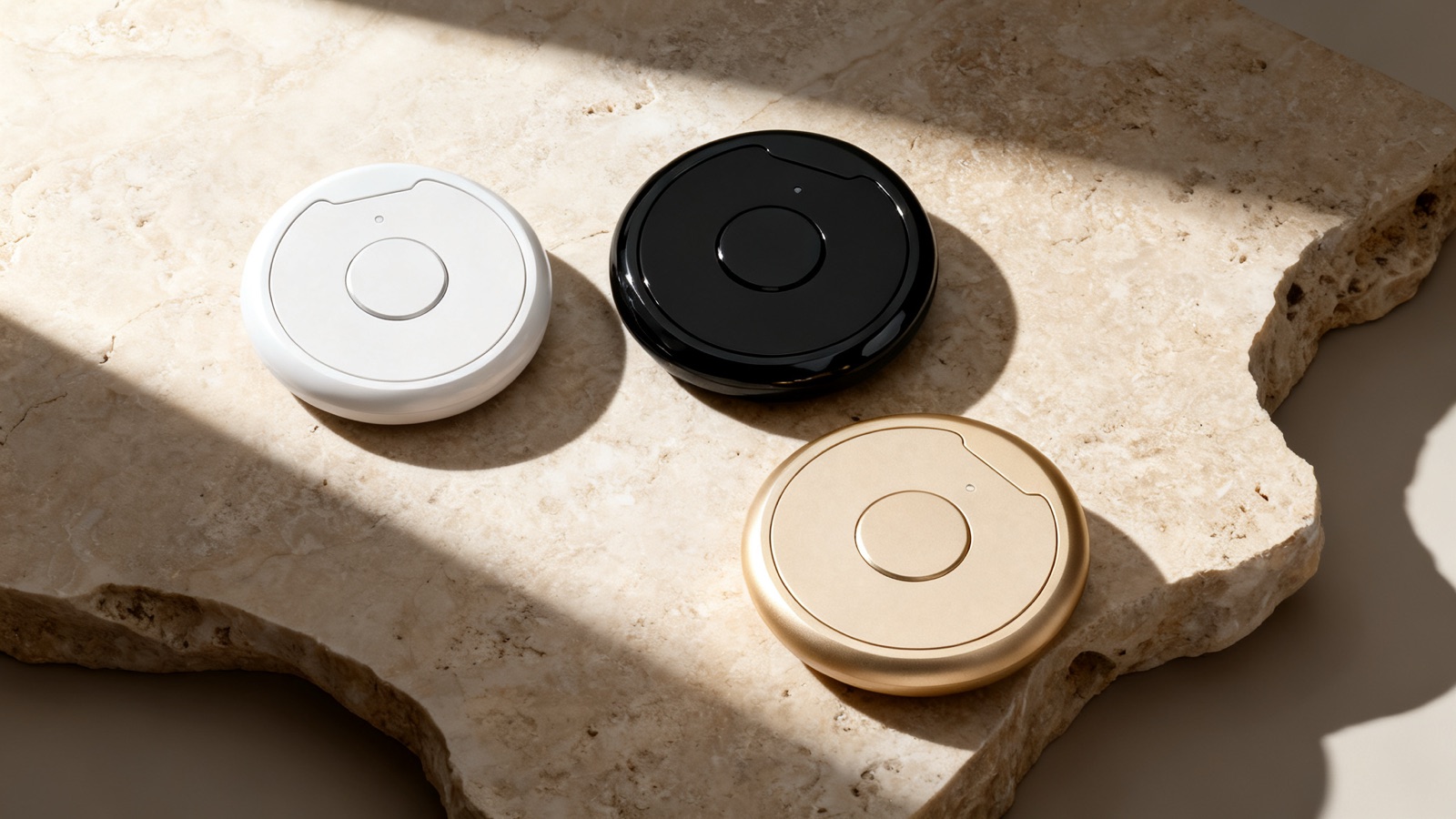
What is an agent dispatcher, and why worn instead of held?
An agent dispatcher is a wearable computer whose only job is to hand work to the powerful AI agents you already run — Claude Code, OpenClaw, Codex — and bring the results back. You wear it, say one sentence, and the agent does the task in the background while your phone stays in your pocket. It is worn rather than held because the moments when you most need to dispatch a task — walking, cooking, driving, mid-meeting — are exactly the moments when pulling out a phone is slow, awkward, or rude.
That is the whole thesis of this piece, stated up front so you can decide in thirty seconds whether to keep reading. The rest of the article defends it: why your best agents are stranded at your desk, why “dispatch” is a different act from “chat” or “ask the assistant,” why a worn surface beats a held one for that act, who else is building in this space, and where Nexting actually sits in the field — honestly, including the parts that are not finished yet.
If you only remember one distinction, remember this one: a voice assistant answers you. An agent dispatcher commands your agents. The first is a search box you talk to. The second is a remote control for software that can plan, edit files, run code, and finish jobs without you watching.
The desk-bound-agent problem
Something strange happened to personal computing in the last two years. The most capable software most people have ever owned — an autonomous agent that can read a codebase, write a feature, draft a contract, or work a multi-step task on its own — arrived at almost the same moment that it became completely trapped at the desk.
The capability is real and the adoption is steep. The global AI-agents market is projected to reach roughly $10.9–12 billion in 2026, growing at a compound annual rate near 44–46%, according to industry trackers compiled by Accelirate and First Page Sage. Gartner forecasts that 40% of enterprise applications will embed task-specific AI agents by the end of 2026, up from under 5% in 2025. In software specifically, the shift is even sharper: by February 2026, Claude Code alone was authoring roughly 4% of all public GitHub commits — about 135,000 a day — with a single-day peak above 326,000 in mid-March, per usage data aggregated by SerpSculpt and SemiAnalysis. The Pragmatic Engineer's survey of 15,000 developers found 73% of engineering teams now use AI coding tools daily, up from 41% a year earlier.
So the agents work, and people are pouring into them. Here is the contradiction: every one of those agents lives behind a screen you have to sit in front of. The terminal is on your laptop. The agent's server runs on your Mac. To give it a task, you stop what you are doing, find a surface, open an app, and type. The agent can run for ten minutes unattended — but you cannot leave the desk, because the moment it needs a decision or hits a prompt, it stalls, and you are not there to answer.
“We built software that can work without supervision, then chained the human to a chair so they could supervise it.”
The result is a quiet absurdity. You own a tireless worker, and your main job has become babysitting it. You sit at the desk not because the work needs you there, but because the interface needs you there.
And the gap between “adopted” and “actually running in the wild” is wide enough to drive a thesis through. Almost four in five enterprises have adopted AI agents in some form, yet only about one in nine runs them in production, according to 2026 data compiled by Prefactor and GoGloby. Some of that gap is governance and cost. But a meaningful slice of it is mundane and physical: an agent that needs a human to unblock it, and a human who is only at the keyboard a few hours a day, will idle most of the time it could be working. The agent is not the constraint. The human's proximity to the keyboard is.
Think about what an unattended agent run actually looks like in practice. You kick off a refactor across forty files. The agent works for eight minutes, then hits an ambiguous call: should it preserve the old API surface or break it cleanly? It pauses and waits for you. If you are at the desk, you answer in five seconds and it continues. If you stepped away to make coffee, it sits there — not because it failed, but because it is polite enough to ask. Every one of those pauses is a place where the value of autonomy leaks out through the interface. The agent could have run all morning; instead it ran for eight minutes and waited four hours for you to come back and tap a key.
This is the desk-bound-agent problem in one sentence: the agent's ability to work in the background is throttled by your inability to be in the background. Solve the second half and the first half finally pays off.
The interface is the bottleneck, not the intelligence
For most of computing history, the bottleneck was the machine: it was slow, it was dumb, it needed exact instructions. We are crossing into a different regime. The model is no longer the slow part. Increasingly, youare — specifically, the friction between having an intention and getting it into the agent.
Consider the physical choreography of giving a coding agent a task today. You are away from the desk. An idea lands: “the staging deploy is probably failing because the env var is stale — have the agent check and fix it.” To act on that thought you must (1) stop walking or stop cooking, (2) retrieve your phone or return to your laptop, (3) unlock it, (4) find the right app, (5) navigate to the right session, (6) thumb-type a paragraph, (7) wait, watch, and re-engage. By step three the thought has often already cooled.
Multiply that friction across a day. Americans check their phones about 186–205 times a day, according to 2026 figures from Reviews.org, and knowledge workers absorb on the order of 275 interruptions per workday. The phone is not a calm dispatch surface; it is the single most interruptive object you own. Pulling it out to command an agent drops you into the same notification swamp you were trying to escape. The act of dispatching one task exposes you to twenty distractions.
The fix is not a smarter model. It is a thinner interface — one that sits between intention and agent with almost nothing in the way. That is the gap an agent dispatcher is built to fill.
A short history of interfaces shrinking
It helps to see this as the next step in a long pattern. Computing's interface has been collapsing toward the user for decades. Punch cards put a clerk and a day of latency between intention and result. The command line removed the clerk but kept the syntax. The graphical interface removed the syntax but kept you at the desk. The smartphone removed the desk but kept the screen in your hand and your eyes locked to it. Each step did the same thing: it deleted a layer of friction between what a person wanted and what the machine did.
Voice was supposed to be the next deletion — remove the screen, remove the hands — and it half-failed, because the thing on the other end of the voice command was dumb. “Set a timer” is the ceiling of an interface whose backend cannot actually do anything. Now the backend can do almost anything. The agent on the other end can plan, write code, call tools, and finish multi-step jobs. For the first time, removing the screen does not mean removing the capability. The voice interface finally has a brain worth talking to, which is exactly why a worn, spoken dispatcher is plausible in 2026 in a way it simply was not in 2016.
Dispatch is not chat, and it is not a voice assistant
The word “dispatch” is doing real work here, so let me be precise about it. Three modes of talking to AI look similar from the outside and are completely different in what they ask of you.
Chat: a conversation you have to hold
In chat, you and the model trade turns in real time. It is wonderful for thinking out loud and terrible for getting things done while living your life, because it demands your continuous presence. Chat is a phone call. You cannot put it down.
Voice assistant: a query you speak instead of type
A voice assistant — Siri, Alexa, the “ask AI” button on a wearable — takes a spoken query and returns a spoken answer. It is a faster search box. Critically, the assistant answers you: it does not own a codebase, a deploy pipeline, or your project history. Its world ends when the reply finishes.
Dispatch: a command you hand off and forget
Dispatch is fire-and-forget delegation to your own agents. One sentence goes out. The agent — which already has your context, your files, your tools — runs the job in the background. The result comes back later, even if your phone is locked and you have walked three blocks away. You are not holding a conversation and you are not waiting on an answer; you are assigning work and moving on.
| Dimension | Chat | Voice assistant | Agent dispatch |
|---|---|---|---|
| Your presence | Required throughout | Required for the query | Required only to give the order |
| Who acts | Model, turn by turn | Assistant answers you | Your agent does the job |
| Context it carries | The conversation | Little to none | Your files, tools, history |
| Time horizon | Now | Now | Minutes to hours, in background |
| Best surface | Screen | Speaker / phone | A worn, glanceable device |
The last row is the punchline. Chat wants a screen. A voice assistant tolerates a phone. But dispatch — a short command out, a result back later — is the one interaction that is genuinely better on a device you wear and rarely look at, because the whole point is to not be staring at anything.
Why “worn, not held” is a real claim, not a slogan
“Worn, not held” is easy to read as marketing. It is actually a claim about specific moments — the moments where the held device fails and a worn one wins. Hands and attention are the scarce resources, and a phone consumes both. A worn dispatcher consumes neither.
Walk through the moments where pulling out a phone is the wrong move:
- Walking. Heads-down thumb-typing on the move is slow, unsafe, and you lose the train of thought stitching the walk together. A spoken sentence costs you nothing.
- Cooking. Your hands are wet, oily, or full. A touchscreen is the last thing you want to touch, and the agent task you just thought of will be gone by the time you wash up.
- Driving. Reaching for a phone is dangerous and, in most places, illegal. A worn device with a single press-to-talk gesture keeps both eyes on the road.
- In a meeting.Pulling out your phone reads as disengagement — rude, even. A discreet, glanceable wearable lets you offload a task without broadcasting that you have checked out.
- The moment of the idea. The best instructions are the ones you capture the instant they form. Anything that adds five steps between thought and capture loses most of the thoughts.
None of these is exotic. They are the texture of an ordinary day, and in every one of them the phone — the most powerful held computer ever made — is the wrong tool, because holding it is the problem. An Agent remote-control product is built for precisely the moments when you do not want a screen in your hand.
“The next personal computer is not a smaller screen you hold closer. It is the absence of a screen, plus a sentence.”
There is also a subtler argument hiding in the data. Frequent checking — not total screen time — is what 2026 attention research from UNC's College of Arts and Sciences links most strongly to fragmented attention and weaker self-control. The damage is in the retrieval gesture, the dozens of little reaches that each crack your focus open. A worn dispatcher attacks exactly that gesture. You do not reach, unlock, and surface into the feed; you press a button you are already wearing and speak. The task gets dispatched without the retrieval ever happening. In a real sense the wearable's job is to let you command your agents without picking up the most distracting object you own.
A day with an agent dispatcher
Abstractions are easy to nod along to and hard to feel. So here is the same ordinary day, lived twice — once with a phone as your only interface to your agents, once with a worn dispatcher.
The phone-only day
You are walking to the train and remember the nightly job is probably still pointing at the old bucket. You make a mental note. At the platform you pull out your phone to fix it, see eleven notifications, answer two, forget the bucket. On the train you remember again, open the terminal app, start typing on the move, get jostled, give up. At your desk an hour later you finally dispatch it — the agent finishes in three minutes. Net cost: an hour of latency and three context-switches, for three minutes of work.
Later you are cooking. You think of a clean fix for the bug that has been nagging you. Your hands are covered in oil. The thought needs your phone, and your phone needs clean hands, and dinner needs your attention. The fix evaporates. You will rediscover it in two days, or not at all.
The dispatcher day
Walking to the train, you press the device on your collar and say: “Have Claude Code repoint the nightly job at the new bucket and run the test suite.” You keep walking. By the platform, the result is back — tests green — and you never opened your phone or saw a single notification. Cooking, oily-handed, you press and say: “Tell Codex the null check belongs in the parser, not the caller — have it move it and open a PR.” You go back to dinner. The PR is waiting when you sit down.
The difference is not that one day has better AI. The agents are identical. The difference is that in the second day the friction between thought and dispatch is near zero, so the thoughts actually become tasks instead of evaporating. That is the entire value proposition, made concrete: more of your intentions survive long enough to get done.
Why the first wave of AI hardware failed — and what it taught us
You cannot honestly propose a new wearable category in 2026 without confronting the graveyard. The first generation of dedicated AI hardware was a public, expensive failure, and the lessons are specific.
The Humane AI Pin launched in 2024 at $699 plus a mandatory $24/month plan. Reviewers found latency of two to five seconds on routine queries, overheating during extended use, and a laser projector that was hard to read in daylight. Fewer than 10,000 units shipped before HP acquired the assets and shut the service down in February 2025, per reporting from TechRadar and TIME. The Rabbit R1, at $199, fared little better — Marques Brownlee called it “barely reviewable,” and the central question, what can it do that a phone cannot, never got a convincing answer. By early 2026 the company was reportedly in financial distress.
The autopsy is consistent across analyses (DigitalApplied's 2026 post-mortem put it bluntly): these products shipped technological capability without product-market fit. But there is a deeper, more useful reading. They all tried to replace the phone as a general-purpose computer, with their own under-baked OS and their own single, captive AI. They asked you to give up everything you already had for a worse version of it.
The category that survives will do the opposite. It will not try to replace your phone or your agents. It will be a thin, dedicated surface for one job — dispatching to the powerful agents you already own and trust. Not a new brain. A new mouth and ear for the brains you have.
There is one more lesson, and it is about humility of scope. The Pin and the R1 both promised to do everything— calls, messages, photos, search, translation, an entire pocket OS. Doing everything badly is worse than doing one thing well. The agent dispatcher is a deliberately narrow product: it dispatches, it relays, it delivers. It does not want to be your camera or your maps. Narrowness is not a weakness here; it is the whole reason the device can be cheap, light, and reflexive enough to actually live on your body.
Why developers are the wedge
New computing categories rarely start with everyone. They start with the people who feel the pain most acutely and have the agents most worth dispatching to. In 2026, that is developers running coding agents — and the numbers explain why they are the perfect first market.
Coding agents are the most autonomous, most context-rich, longest-running agents in wide use. Claude Code, Codex, and OpenClaw routinely work for many minutes at a stretch, touching dozens of files. SemiAnalysis projects Claude Code will author more than 20% of all daily public commits by the end of 2026, and companies like Mercado Libre have publicly targeted 90% autonomous coding across a 23,000-engineer org by Q3 2026, per MIT Technology Review's coverage of the “Code with Claude” event. These are not toy agents answering trivia. They are doing the work.
And they are exactly the agents that suffer most from the desk-bound problem, for two reasons. First, they run long — long enough that you want to walk away, which is precisely when they stall on a prompt. Second, they raise decisions, not just outputs: “which approach do you want,” “this test is failing, should I change the test or the code,” “this migration is destructive, confirm?” Those mid-run decisions are the single biggest reason a developer cannot leave the desk. A dispatcher that lets you answer them from your pocket converts the longest, most valuable agent runs from desk-chained to truly background. That is why the developer with a live Claude Code session is the sharpest possible wedge for the whole category.
A short tour of the field
The 2026 landscape splits cleanly along that fault line: devices that are the AI versus devices that connect you to your AI. Most of the well-known hardware is the former. It is a useful lens because it predicts which products age well. A device that is the AI is only as good as its one captive model and dies when that model falls behind. A device that connects you to your AI inherits every improvement in the agents it talks to, for free, forever. As the agent layer keeps improving on a steep curve, the connector compounds while the appliance depreciates.
The captive-AI wearables
- Meta Ray-Ban($299+) — excellent glasses, but bound to Meta AI. A single provider, not your agents.
- Friend($99) — an always-listening companion pendant, Friend AI only, partially open. Designed for company, not for getting work done.
- Bee($49.99 plus subscription) — a life-logging recorder tied to Bee AI.
- Plaud NotePin($169) — a strong meeting recorder and transcriber, locked to Plaud's stack.
- Rabbit R1 / Humane Pin— the cautionary tales above; single captive AI, closed, struggling or dead.
Each is competent at its niche. None lets you point it at your agent and hand off your work. They are appliances with one brain bolted in.
The 2026 entrants circling the dispatcher idea
Three newer projects are worth watching because they brush up against the agent-dispatcher concept from different sides:
- Button Computer($179, YC W2026, built by ex-Apple Vision Pro engineers, shipping late 2026) is the most polished new general-purpose voice assistant on the way — but it is a voice assistant. It does not control coding agents; it answers you. Same category as Siri, nicer hardware.
- Happy(MIT-licensed, free, 17k+ GitHub stars) is the closest thing in spirit to voice-controlling Claude Code — and it proves there is real demand for exactly that. But it is software only. There is no device; you are still reaching for a phone.
- Claude Hardware Buddyis Anthropic's official open reference— a BLE notification-peripheral example, not a consumer voice device. It signals that the platform owners see hardware as part of the agent story, without shipping a product.
Put the field on a grid and the empty corner is obvious. The hardware that exists has captive AI. The software that talks to your real agents has no hardware. The intersection — a worn device that dispatches to the mainstream agents you already use — is where the category actually lives, and it is mostly unoccupied.
| Product | Price | AI it uses | Controls your agents? | Hardware? |
|---|---|---|---|---|
| Humane AI Pin | $499 + $24/mo | Single, captive | No | Yes (discontinued) |
| Rabbit R1 | $199 | Rabbit OS only | No | Yes |
| Meta Ray-Ban | $299+ | Meta AI only | No | Yes |
| Button Computer | $179 | General assistant | No (answers you) | Yes (late 2026) |
| Happy | Free (MIT) | Your Claude Code | Yes | No (software only) |
| Nexting PIN | $129 | Your own agents | Yes | Yes (shipping) |
How Nexting embodies the category
Nexting is the remote-control layer for your personal AI agents. Use the phone app, PIN, or Ring to reach your agents, then let them finish the work in the background while you step away from the screen. That sentence is the entire product philosophy, and every design choice falls out of it.
Bring your own agent — and it is free
Nexting does not ship a captive AI. It integrates deeply with the mainstream agent tools you already use: Claude Code, OpenClaw, and Codex. Bring-Your-Own-Agent (BYOA) is free. The device's job is not to be smart; it is to be the fastest possible path to the agents that already are. (For people who want zero setup, Nexting Plus is a separate, optional managed mode — Claude, GPT-4o, Gemini, hosted for you — at $29/month or $279/year. It is a convenience, not the core.)
Fire-and-forget, with delivery while you are gone
The interaction is dispatch, not chat. One sentence goes out; the agent runs; the result comes back — and it comes back while your phone is locked and you are on the move. There is no screen to babysit. This is the part the recording-pendant wearables structurally cannot do: they capture, they do not delegate.
The standout: remote-control a live Claude Code session
Here is the capability that, more than any other, makes the desk-bound-agent problem go away. With Nexting you can remote-control a running Claude Code session from your pocket. You see it live, you reply for it, you answer the prompts it raises, and you keep it running — all from your phone, relayed to your Mac. (The phone does not run Claude itself; it is a relay and a remote.) The agent never stalls waiting for you to get back to the desk, because the desk now travels with you.
It is worth dwelling on why remote-controlling a live session is the keystone feature rather than a footnote. Every objection to autonomous agents reduces to the same fear: it will go off the rails while I am not watching. The usual answers are bad — either you babysit it (defeating the point) or you let it run blind (defeating the trust). Remote control is the third path. The agent runs free; the moment it raises a decision, the device surfaces it to your pocket, you answer in one tap or one sentence, and it keeps going. You get the autonomy of a background agent and the safety of a human in the loop, without being chained to the chair to provide it. That combination is the thing the recording-pendant wearables and the captive-AI gadgets structurally cannot offer.
The rest of the toolkit
- Speak-to-get-text— hold to talk, swipe up to convert to text.
- Schedules and reminders spoken on the move.
- iPhone integration— Calendar, Reminders, Contacts, HealthKit, Location, HomeKit.
- Skills ecosystem— install capabilities from ClawHub or directly from GitHub.
Privacy: dispatch without handing over your work
A device that listens to you and touches your codebase has to earn trust on privacy, not just claim it. The architecture matters more than the marketing copy.
In the BYOA modes — Claude Code, Codex, and MyOpenClaw — end-to-end encryption is optional and off by default. When enabled, the agent runs on your own device, the keys stay with you, and Nexting's cloud relays ciphertext, not readable session content. The relay moves bytes it cannot read. The managed Nexting Plus mode is a separate, hosted option that does require cloud-side processing — that is the honest trade you make for zero setup, and it is opt-in.
Across the board the commitments are simple and absolute: never train on your data, never sell it, never share it, and let you delete it anytime. For a developer pointing a wearable at a private repository, “the relay cannot read it” is not a nice-to-have — it is the precondition for using the thing at all.
The architectural reason this is possible — and the reason it is not just a promise — is that in BYOA modes the agent runs on yourmachine, not in someone's cloud. Your Mac runs Claude Code; the wearable and the phone are a microphone and a remote. The cloud's only role is to move encrypted bytes between your devices when they are not on the same network. A relay that handles ciphertext cannot leak plaintext it never possessed, regardless of intent, subpoena, or breach. This is the opposite of the first-wave model, where every word you spoke flowed through a single vendor's servers in the clear. The privacy is a property of where the work happens, not of a policy you are asked to trust.
That distinction matters more every quarter, because the work agents touch is getting more sensitive. A coding agent reads your proprietary source. An ops agent sees your infrastructure. A personal agent wired to Calendar, Contacts, Location, and HealthKit holds the most intimate map of your life that exists. The category cannot scale on “trust us.” It scales on architectures where there is nothing to trust because there is nothing readable in the middle.
Two form factors: PIN now, Ring as the flagship
Nexting ships in two shapes, and they are at different points on the road.
Nexting PIN — $129, shipping now
The PIN pins to your collar, with free worldwide shipping. At $129 with free BYOA, it is a deliberate counter-position to the $499-plus, subscription-gated first wave: cheaper than a Rabbit R1, a fraction of a Humane Pin, and unlike either, it points at the agents you already trust. It is available today.
Nexting Ring — reserve for $1
The Ring is the flagship — the form the whole idea is really aiming at, because a ring is the most always-present, least-intrusive thing you can wear. A refundable $1 reservation becomes a $50 launch credit, with estimated fulfillment around Christmas 2026. The reservation is not a claim about the Ring's final retail price.
Co-Builder Edition: honest about the hardware
Worth saying plainly: current units are 3D-printed and user-assembled. We frame that as the Co-Builder Edition— early hardware for people who want to be early and hands-on, not a glossy mass-produced consumer object pretending to be finished. The OpenClaw is an open plugin standard, and the Nexting Devices SDK is the only open-source part of the product. The hardware, firmware, app, and cloud are proprietary. If you want a sealed appliance, wait for the Ring; if you want to shape the category while it forms, the PIN is the early entry point.
Honest objections and real limits
A thesis worth holding should survive its own counterarguments. Here are the strongest objections to the wearable-agent-dispatcher idea, answered without dodging.
“My phone already does this.”
It can, technically — and that is exactly the trap. Your phone can dispatch a task, just as it canbe a flashlight. But the friction (unlock, find app, find session, type) and the interruption tax (you arrived for one task and got pulled into ten) mean you mostly do not. The dispatcher's claim is not “impossible on a phone.” It is “low-friction enough that you actually do it,” which is a different and harder bar.
“Voice is unreliable and public.”
Fair. Speaking a command in a quiet open-plan office or a crowded train is awkward, and transcription is imperfect. This is a genuine limit, not a solved problem — it is why speak-to-get-text and on-screen confirmation exist, and why the Ring's discreet form matters. Dispatch shines on the move and in private; it is weaker in the exact social settings where any voice device is.
“Agents are not trustworthy enough to run unattended.”
Also fair, and the data agrees in part: Gartner predicts more than 40% of agentic AI projects will be canceled by the end of 2027, citing unclear value and weak risk controls, and only about one enterprise in nine that has adopted agents actually runs them in production. Autonomy has limits. The honest response is that dispatch is not blind autonomy — the remote-control-the-live-session feature exists precisely because you sometimes need to step in. The dispatcher lets the agent run and lets you take the wheel from your pocket. It widens the band of work you can safely hand off; it does not pretend the band is infinite.
“It is another device to charge and carry.”
True, and we will not insult you with a fake battery number. The honest pitch is qualitative: a worn device earns its place only if dispatching becomes something you do dozens of times a day without thinking. If it does not become reflexive, it is just another thing on the nightstand. That is the bar the category has to clear, and it is a real risk.
“The agent economy is overhyped — this is riding a bubble.”
A serious objection, and partly true. Plenty of agentic projects will be canceled, and the 40%-by-2027 cancellation forecast is a real warning. But notice the shape of the failures: they are mostly about agents that were oversold as fully autonomous and under-delivered on reliability and governance. A dispatcher does not bet on agents being perfectly autonomous. It bets the opposite — that agents are useful but need a human to unblock and steer them, and that the cost of providing that steering should not be a chained-to-the-desk human. The product is hedged against the bubble precisely because it assumes agents will keep needing you. If anything, the more the “fully autonomous” story disappoints, the more valuable a low-friction human-in-the-loop interface becomes.
Who this is for — and the person who built it
The clearest user is the person whose agents already do real work and who resents being chained to the desk to watch them. Developers running long Claude Code or Codex sessions. Operators who delegate multi-step tasks to OpenClaw. People whose best ideas arrive while walking, cooking, or commuting — nowhere near a keyboard.
Nexting is built by Eric Shang (尚奕勇), a former embedded-software engineer at DJI who worked on autonomous driving and AUTOSAR. He is a solo founder building the hardware, firmware, iOS app, cloud backend, and website himself — which is also why the early units are hand-assembled and why the honesty about limits in this article is the same honesty in the product. His own framing of the need is the cleanest one-line statement of the category I have heard:
“I just want results. I don't need real-time interaction. I need a tool to dispatch tasks anytime, anywhere.”
That is the difference between a chat product and a dispatcher in fourteen words. Real-time interaction is the thing the desk forces on you. Results are the thing you actually wanted.
It is also why the honesty in this article is not a stylistic choice. A solo founder hand-assembling early units cannot hide behind a marketing department, and should not. The early Nexting buyer is not a passive consumer; they are a co-builder betting on a category before it is obvious, the same way the first people to buy a personal computer in a hobby-kit form were betting on something the rest of the industry had not noticed yet. If you want the finished, sealed version, it is coming. If you want to help shape what the Agent remote-control product becomes, the door is open now, and the price of entry is deliberately low.
Where this goes next
If the thesis is right — that interface friction, not model intelligence, is now the binding constraint — then the trajectory is fairly predictable, and a few things have to be true for the category to win.
- The form recedes. PIN today, Ring tomorrow: the winning device is the one you forget you are wearing. Every gram and every glance is friction; the endpoint is a dispatcher that disappears.
- Open beats captive. The first wave died bolting one captive AI into a closed box. The survivors will be the ones that ride your agents and stay out of the way, the way the modem rode the network it did not own.
- Delivery, not conversation, becomes the metric. The interesting number is not how good the chat feels; it is how many tasks finished while you were not looking. Background completion is the product.
- Trust is built on architecture. As wearables touch private codebases and private lives, end-to-end encryption and on-device execution stop being features and become table stakes. Relaying ciphertext you cannot read is the only defensible position.
The phone is not going anywhere; it remains the best held computer ever built. But the next personal computing surface — the thing between your intention and your agents — does not need to be held at all. The agents are already capable, already adopted, already running. The only thing missing is a thin, worn, trustworthy way to point them at the work the moment the thought arrives.
There is a counter-scenario worth naming, because honesty demands it. The category could fail to materialize as a distinct product. Phone makers could make dispatch frictionless enough — a dedicated button, an always-listening privacy-safe mode, a lock-screen handoff to your agents — that a separate device never earns its place. Glasses could win instead of rings, putting a heads-up display back into the loop. The agents themselves could become reliable enough that the human-in-the-loop remote is needed so rarely that any input surface suffices. None of these is far-fetched. The bet behind a dedicated dispatcher is that the friction and interruption tax of the phone are structural, not incidental — that the most distracting object you own will never be the calm place from which you command your agents. If that bet is wrong, the phone absorbs the category. If it is right, the dispatcher becomes its own thing, the way the smartwatch eventually did despite the phone in the same pocket.
Either way, the underlying shift is already here and is not reversing: capable agents are cheap and abundant, and the scarce resource is a low-friction way to point them at the right work at the right moment. Whoever owns that interface — phone, ring, pin, or something not yet built — owns the most valuable piece of real estate in personal computing, because it sits at the exact seam between human intention and machine action.
That seam now has a name. It is an agent dispatcher, and the strongest version of it is worn, not held.
Meet Nexting PIN — $129
An Agent remote-control product. Wear it, say one sentence, and your own agents — Claude Code, OpenClaw, Codex — finish the work in the background.
Buy now