Nexting PIN vs Ring: Choosing Your Wearable Form Factor
Two forms, one Agent remote-control path. Nexting PIN retails for $129, with a separate $1 reservation that locks the $104 Founder Edition offer. Nexting Ring is the $699 flagship: reserve for $1, receive a $50 launch credit, with estimated fulfillment around Christmas 2026.
Eric Shang
Founder, Nexting Inc.
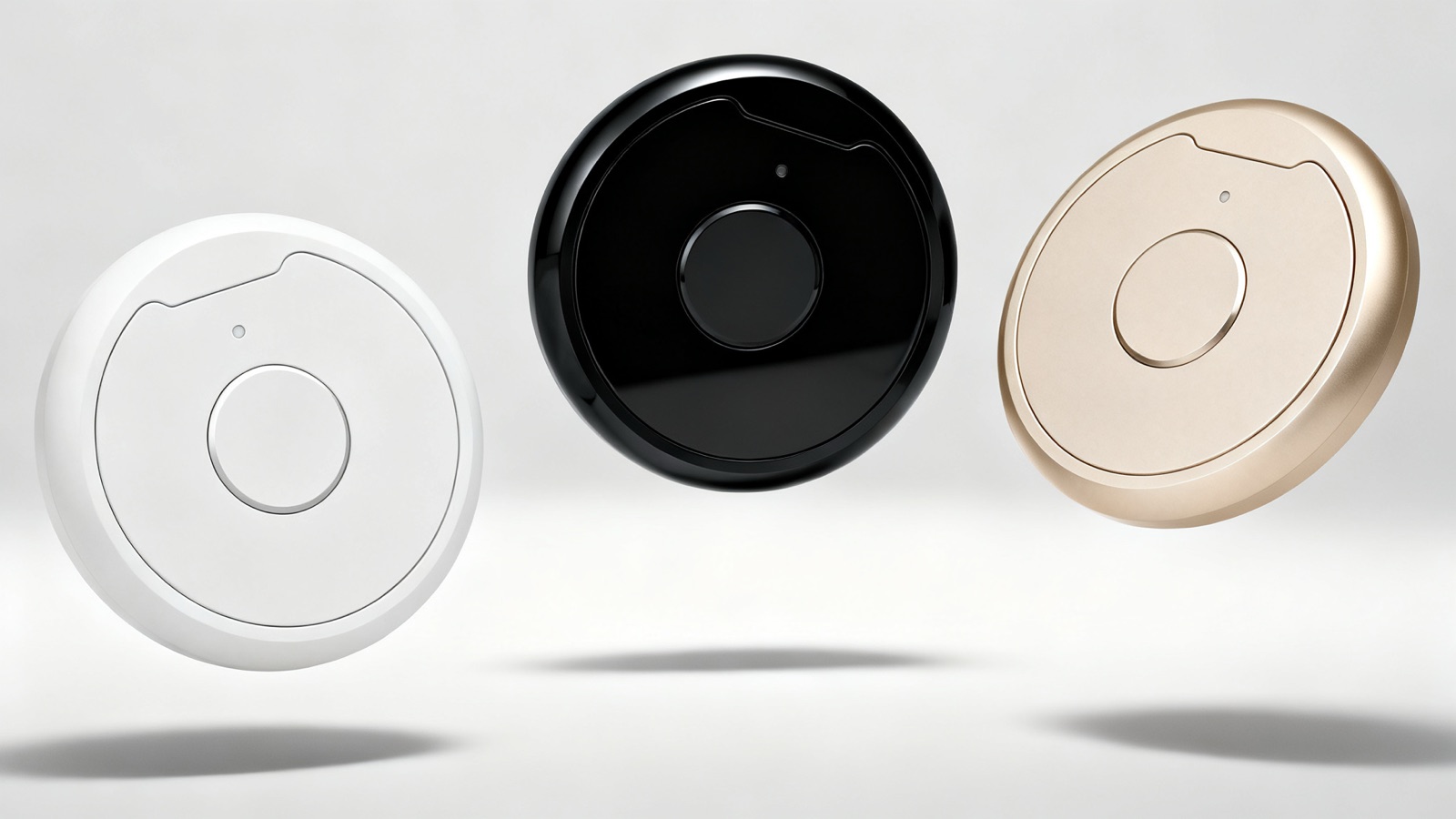
Nexting makes one product — an Agent remote-control product — in two shapes. The PIN costs $129, ships today, and clips to your collar; the Ring is the flagship, most-invisible form, with a refundable $1 reservation that becomes a $50 launch credit and estimated fulfillment around Christmas 2026. Both run the same thing: your own agent team, dispatched by voice. If you want a Nexting on your body this month, the answer is the PIN. This article is the honest comparison.
Why form factor is the whole argument for an always-on device
Most gadget comparisons are about specifications. This one is not, because Nexting is not really a gadget in the usual sense. It is a way to talk to the AI agents you already run — Claude Code, OpenClaw, Codex — without reaching for a phone or opening an app. You say one sentence; an agent runs the task in the background; the result comes back when it is ready. The device is the doorway to that interaction. And for a doorway you walk through dozens of times a day, the shape of the door matters more than almost anything printed on a spec sheet.
Here is the uncomfortable truth about wearables: the best feature is the one you actually use, and you only use the things that are frictionless. A device that lives in a bag is a device that hears nothing. A device you take off because it is heavy, hot, or socially awkward is a device that is off when the idea strikes. The entire promise of an agent dispatcher — capture the thought the moment you have it, hand it to a capable agent, keep walking — collapses the instant the hardware adds friction. So form factor is not a finishing touch. It is the product thesis.
That is why we ship two shapes instead of one perfect compromise. There is no single body location that is simultaneously the most discreet, the most ergonomic, the easiest to speak into, and the most socially invisible. Different people, different days, and different rooms ask for different trade-offs. The PIN and the Ring are two honest answers to the same question, and the right one depends on you.
“The form factor is the function. A dispatcher you do not wear dispatches nothing.”
What both forms have in common
Before the differences, the part that does not change. Whichever shape you pick, you get the same product underneath. Nexting is a dispatcher, not a chatbot. The interaction model is fire-and-forget: a single spoken instruction goes out, an agent picks it up, the work happens off your attention, and the answer arrives later. You are not babysitting a token stream. You are delegating.
And the agents are yours. This is the part that separates Nexting from the assistant-in-a-box devices. Nexting runs on bring-your-own-agent— you connect the agents you already pay for and trust, and that connection is free. There is no proprietary house assistant you are forced to rent.
- Your agent team— Claude Code, OpenClaw, and Codex, with deep integration rather than a thin voice wrapper.
- BYOA is free— bring your own agents at no cost. Nexting Plus, the managed option, is $29/month or $279/year for people who want it handled for them.
- Optional privacy boundary in BYOA modes— end-to-end encryption is off by default; when enabled, keys stay with you and the cloud relays ciphertext. Managed Plus necessarily touches the cloud to do its job. Either way: no training on your data, no selling it, no sharing it, and you can delete it whenever you want.
- Remote control of a running session— you can drive a live Claude Code session from your pocket: dispatch a task, watch it work, answer its questions, and walk away while it keeps going.
So the choice between PIN and Ring is genuinely a choice about shape and availability, not about capability. Same brain, two bodies. Read the next sections with that fixed in your mind: nothing you give up by choosing one form is a feature of the software.
The PIN: the one you can get today
The Nexting PIN is $129, shipping now, with free worldwide shipping. A separate $1 reservation locks the $104 Founder Edition offer. It pins to your collar — the front of a shirt, a jacket lapel, the neckline of a sweater. It sits high on your torso, close enough to your mouth that speaking to it feels natural and quiet, and high enough that it has a clear line to the room around you. If you have ever watched a TV reporter clip a small microphone to their lapel, you already have the right mental picture for where it lives and why that spot works.
When the PIN shines
The collar position is a quietly excellent place for a talk-to-it device. It is near the vocal tract, so capture is clean without you raising anything to your face. It is hands-free in the truest sense: both your hands can be on a keyboard, a steering wheel, a stroller, a coffee, and you can still dispatch a task by speaking. And because it lives on your outermost layer, you put it on once in the morning the way you clip on a badge and forget about it.
- Walking and commuting— speak a thought into your collar without breaking stride or fishing out a phone.
- At the desk, hands on the keys— dispatch a Claude Code task out loud while you keep typing on something else.
- Hands-full moments— cooking, carrying, driving, parenting; the times you most want to offload a task are exactly the times your hands are occupied.
- People who do not want a ring or glasses — a clip asks nothing of your fingers or your face. You wear it on your clothes, not on your body.
Ergonomics and the honest caveats
A collar clip has real, mundane trade-offs and it is better to say them plainly. It depends on having a collar or a neckline to clip to — a thin summer tee or a strapless dress is a worse host than a button-down or a jacket. It is visible: it sits on the outside of your clothing where other people can see it, which is a feature if you want the interaction to be legible and a drawback if you want it to disappear. And like any clipped object, it can be knocked or repositioned over a long active day. None of this is disqualifying. It is the ordinary physics of wearing something on your shirt, and for most people most days, the collar is a forgiving, comfortable place for a device to live.
How you actually use it
The loop is short on purpose. You have a thought — “refactor the auth module and run the tests,” or “summarize the three papers in my downloads and draft an email,” or “check whether the deploy finished and tell me if anything broke.” You speak it toward your collar. The PIN hands that instruction to the agent you have connected. The agent goes to work in the background. You go back to your life. Minutes later, the result comes to you. No app to open first, no chat window to manage, no waiting on the device while it thinks. That is the dispatcher experience, and the PIN delivers all of it for $129, in your hands now.
The Ring: the most invisible way to raise your hand
The Nexting Ring is the flagship — the core form the product is built around. A refundable $1 reservation becomes a $50 launch credit, with estimated fulfillment around Christmas 2026. The Ring is now priced at $699. A refundable $1 reservation becomes a $50 launch credit, with estimated fulfillment around Christmas 2026. What we can talk about honestly is the case for the form, because the ring is arguably the most interesting place on the human body to put an agent dispatcher.
The argument is about a gesture. With a ring, the interaction can be reduced to something almost subliminal: raise your hand slightly, say one line, lower it. There is no clip to find, nothing to unholster, nothing to bring up to your face in a way that announces “I am using a device.” The motion of bringing a hand near your mouth to speak quietly is one humans already do and read as natural. A ring leans into that — the dispatch becomes a small, private, socially fluent gesture rather than an event.
“Raise your hand, say one line, and an agent goes to work. The ambition for the Ring is for the device to all but disappear.”
The case for the invisible form
Rings have a property the rest of the wearable world envies: people already wear them, all day, without thinking. Industry analysts describe the ring as comfortable and unobtrusive to wear continuously, which is exactly why the smart-ring category has been growing so fast even when constrained to health tracking. A device that you never take off is a device that is always ready — and “always ready” is the precondition for an always-on dispatcher to be worth anything. The most powerful capture is the one available in the half-second between having an idea and losing it.
- Maximum social invisibility— no one needs to know you just dispatched a task. The gesture reads as you, not as a gadget.
- Always on you— rings are the wearable people forget they are wearing, which is precisely the point for an always-ready dispatcher.
- Smallest possible interaction— raise, speak, done; the lowest-friction path from thought to dispatched agent.
The honest caveat
The Ring can be reserved, but it is not something you can buy for immediate delivery today. Its refundable $1 deposit becomes a $50 launch credit, with estimated fulfillment around Christmas 2026; the Ring is priced at $699. The form factor is genuinely hard — the broader industry has documented why a finger is a demanding place to put microphones, speakers, antennas, and a battery, because there is so little room and the device sits far from your mouth. If you want the experience today, the PIN is how you get it. The Ring is what you reserve if invisibility is the thing you care about most.
PIN vs Ring, side by side
Here is the comparison stripped to what actually differs. Remember: the capabilities row is identical on purpose. Everything that varies is shape and availability.
| Dimension | Nexting PIN | Nexting Ring |
|---|---|---|
| Availability | Shipping now | Reservations open; estimated Christmas 2026 |
| Price | $129 (free worldwide shipping) | $1 refundable deposit; $50 launch credit |
| Wear location | Collar / lapel / neckline | Finger |
| Visibility | Visible on your clothing (legible by design) | Most invisible; reads as jewelry |
| Gesture | Speak toward your collar, hands free | Raise your hand, say one line |
| Best for | Anyone who wants it today; hands-full life | People who prize total social invisibility |
| Capabilities | Your agent team, BYOA, dispatch | Your agent team, BYOA, dispatch (same) |
Read the last row twice. The software, the agents, the dispatch model, the privacy posture — all identical. You are choosing where the device sits on your body and whether you want it in your hands this month or are willing to wait for the most invisible form.
How to choose today
The decision is simpler than the table makes it look, because one of the two options is not yet purchasable. So the practical guidance comes down to a short set of if-then statements.
- You want a Nexting on your body this month → get the PIN. It is the only one shipping, and it delivers the full experience.
- You live a hands-full life— commuting, cooking, coding, carrying — → the PIN's hands-free collar position is made for you.
- You do not want anything on your fingers or face → the PIN clips to your clothes and asks nothing of your body.
- Total social invisibility is your top priority and you can wait → reserve the Ring for estimated fulfillment around Christmas 2026.
- You are an early adopter who wants to shape the product → start with the PIN now (see the Co-Builder framing below); your usage and feedback feed directly into where both forms go next.
If you take one thing away: there is no wrong answer that involves the PIN today, because the PIN is the product, fully realized, in a shape you can buy. The Ring is a promise about a shape, not a different product. Choosing the PIN now does not lock you out of anything — it gets you the dispatcher experience immediately, in the form that is real.
The Co-Builder Edition: you are early, and it shows on purpose
Honesty about what you are buying matters more than polish, so here is the unvarnished version. The current Nexting units are 3D-printed and user-assembled— what we call the Co-Builder Edition. This is open hardware in the spirit of early adoption: the people who buy now are not customers at the end of a finished assembly line, they are co-builders at the start of one. The shell came off a 3D printer. You take part in putting it together. It is meant to feel like an instrument you helped tune, not an appliance shrink-wrapped in a box.
That framing is a choice, not an apology. A small, founder-led hardware effort that waited for injection-molded perfection before shipping anything would learn nothing and ship in three years. Shipping the Co-Builder Edition now means the earliest users shape the product while it is still soft — which gesture feels right, which collar positions work, what the dispatch loop should feel like in the wild. If you want a sealed, mass-produced consumer gadget that asks nothing of you, this is not that, yet. If you want to be one of the hands that shapes what an agent dispatcher becomes, this is exactly that.
- 3D-printed, user-assembled— current units are built in the open, by you, with us.
- Open Devices SDK— the public SDK lets compatible hardware connect to Nexting's Agent remote-control path; the product stack remains proprietary.
- Early adopters steer it— the feedback from these first units decides what the next ones are.
Set your expectations accordingly and you will not be disappointed: a $129 Co-Builder PIN is a real, working agent dispatcher and an invitation to help build the thing, in equal measure.
The wider field: every wearable form factor and its trade-offs
Nexting's two shapes do not exist in a vacuum. The whole wearable-AI industry is, at bottom, an argument about where on the body intelligence should live. It helps to look at the full menu, because each location is a different bargain between how easily you can talk to it, how socially invisible it is, how long it can run, and what it can sense. There is no free lunch; every form taxes you somewhere.
As one industry survey put it, each form factor offers trade-offs between interface flexibility, battery life, social acceptance, and sensory input — glasses excel at assistant and translation tasks, pendants dominate transcription, and pocket devices emphasize general-purpose interaction. The right body location is the one that physically supports the thing you most need it to do.
| Form | Strengths | Trade-offs |
|---|---|---|
| Pendant / necklace | Ambient capture; central torso position; room to fit a battery | Dangles and swings; reads as an “always-listening” object; needs a neckline |
| Clip / pin (Nexting PIN) | Hands-free; near the mouth on your collar; put on once and forget | Visible on clothing; depends on having a collar; can be knocked |
| Glasses | Vision and a heads-up display; great for translation and look-and-ask | Heavy power draw near your head limits battery; not everyone wears glasses |
| Ring (Nexting Ring) | Most socially invisible; worn all day without thinking; smallest gesture | Tiny volume for parts; sits far from the mouth; finger fit varies |
| Wristband / watch | Familiar; a screen for output; decent battery and sensors | Some find it uncomfortable all day and overnight; needs frequent charging |
Pendant and necklace
The pendant is the canonical “ambient AI” shape — it sits at the center of your chest with room for a battery, and it is good at passively capturing and transcribing what happens around you. Its weaknesses are physical and social: it swings as you move, and a visible object hanging at your sternum reads to other people as something that might be recording them. For an agent dispatcher specifically, the pendant is a fine host but not an obviously better one than a clip that sits a few inches higher and stays put.
Clip and pin
This is where the Nexting PIN lives, and the survey of the field is kind to it. The clip is genuinely hands-free, sits close to the vocal tract, and you put it on once like a badge. Its honest costs — visibility, needing a collar — are the ones we have already named. The clip's virtue is balance: it is good at the thing that matters most for a talk-to-it dispatcher (clean, hands-free voice capture) without demanding anything of your fingers or your face.
Glasses
Glasses are the form everyone points to when they imagine the AI future, and for vision-first tasks — translate this sign, what am I looking at, show me a heads-up answer — they are unmatched. But they pay for it. Running speakers, microphones, and radios next to your head is power-hungry, which is why expecting a pair of smart glasses to match a ring's multi-day battery is unrealistic. And glasses are not neutral: not everyone wants to wear them, and recording-capable eyewear carries its own social charge. For a pure dispatcher, the heads-up display is more than you need to say one sentence and walk away.
Ring
The ring is the most socially elegant location on the body and the hardest to engineer. Its upside is everything we said about the Nexting Ring: invisibility, all-day wear, the smallest possible gesture. Its downside is brutal physics — there is almost no internal volume for components, the device sits far from your mouth, and finger size affects fit. The wider industry has been candid that a ring has little room for a microphone array or a speaker, which is part of why most shipping smart rings have focused on health sensing rather than rich voice interaction. Getting voice dispatch right on a ring is a real challenge, and it is the reason the Nexting Ring is taking its time.
Wristband and watch
The wrist is familiar and gives you a screen, which is more output than a dispatcher strictly needs. The catch is comfort and charging: analysts note that discomfort wearing a watch all day and overnight, plus the need to charge it constantly, is exactly what pushes some people toward rings in the first place. A watch is a great general-purpose computer for your wrist. As a dedicated, all-day, fade-into-the-background dispatcher, it carries weight (literally and figuratively) you may not want.
What the rest of the market tells us about shape
You do not have to take our word for any of this; the market has been running the experiment in public. The smart-ring category is booming on the strength of the form alone: shipments roughly doubled from around 850,000 units in 2023 to 1.8 million in 2024, and Oura — the dominant player with the lion's share of the market — passed $500 million in revenue in 2024 and has been on track toward a billion. People clearly want a wearable they can forget they are wearing. That is a strong signal in favor of the ring as a destination form, even before anyone solves rich voice on it.
On the voice-ring frontier specifically, others are betting the same way. Sandbar's Stream is a voice-first ring you raise to your lips and press to record — a touch-activated, not always-listening mic — priced at $249 in silver and $299 in gold, with a Series A behind it. We mention it not to compare features but to make a point: serious teams independently arrived at “raise your hand and speak” on a ring as a compelling interaction. The gesture is the draw. Nexting's difference is the dispatcher model and bring-your-own-agent underneath it, but the instinct about the ring's shape is shared, and that is reassuring rather than threatening.
And then there is the cautionary tale that hangs over the whole category. The Humane AI Pin launched at $699 plus a $24-per-month subscription, was panned for being slow and hot and unreliable, saw returns outpace sales, and was ultimately wound down when HP bought the assets for about $116 million and switched the devices off. The lesson is not that pins or wearables are doomed. It is that shipping ambitious hardware before the experience is ready — and asking people to pay flagship prices plus a subscription to find out — is how you lose them. That informs why Nexting prices the PIN at $129, keeps bring-your-own-agent free, and gives the Ring time to mature toward its estimated Christmas 2026 fulfillment window rather than rushing a finger-sized miracle to market.
“The market has voted twice: people will wear a ring all day, and they will abandon hardware that ships before it is ready. We are listening to both votes.”
A day with the PIN
The fastest way to understand why the collar position works is to walk through an ordinary day with it, because the value of a dispatcher is cumulative — it is not one dramatic moment, it is twenty small ones that would otherwise have leaked away. None of what follows requires the device to be clever in the moment; it requires it to be present in the moment, which is the whole reason form factor decides the outcome.
Morning. You clip the PIN to your collar while the coffee brews, the same reflex as putting on a watch or grabbing your keys. On the walk to the train you remember the deploy from last night. Hands in your pockets, you say toward your collar, “check whether the production deploy finished and tell me if anything is failing.” An agent takes it; you keep walking. Before you reach the platform the answer is back: green, except one flaky test, here is the log line. You never opened a screen.
Midday. You are at your desk, both hands on the keyboard for the task in front of you, when a second task occurs to you that you do not want to context-switch into. “Refactor the auth module to use the new token helper and run the unit tests,” you say, without lifting your hands. The agent goes to work on the other repository in the background. You stay in flow on the thing you were already doing. Twenty minutes later, the result arrives — refactored, tests passing, a short summary of what changed. That is two streams of work running at once, and the only reason it happened is that dispatching cost you nothing but a sentence.
Evening. You are cooking, hands covered in flour, and you remember three papers you meant to read. “Summarize the three PDFs in my downloads folder and draft an email to the team with the key points.” You go back to dinner. The draft is waiting when you sit down. This is the part the spec sheet can never capture: the value did not come from a faster chip, it came from the device being on your collar at the exact second your hands were full and your mind was free.
Add those moments up across a week and the case for the PIN is not really about the PIN at all. It is about how many ideas you currently lose to friction — the friction of unlocking a phone, finding an app, typing, waiting, switching back. A collar clip removes that friction for the specific, high-value act of handing work to an agent. The shape is the feature.
Social acceptability is a feature, not a vibe
People talk about social acceptability as if it were a soft, subjective thing. It is not. It is one of the hardest constraints on whether a wearable survives contact with real life, and the history of the category is littered with devices that were technically fine and socially impossible. The reason the ring form is so coveted is precisely that society already accepts it — a ring is jewelry, and jewelry is invisible in the sense that matters: nobody around you treats it as an event.
An agent dispatcher has a particular social profile because the core action is speaking. Whatever the shape, you are saying a sentence out loud, and the question is what that looks like to the people near you. With the Ring, the answer is: almost nothing. Raising a hand near your mouth to murmur a line reads as a person thinking out loud, not a person operating a gadget. That is the upside of the most invisible form — the device disappears, and what is left is just you, talking quietly.
The PIN sits at a different, deliberate point on the spectrum. It is visible, and that visibility is honest. When you speak toward a small, legible clip on your collar, the interaction is readable — it does not pretend to be nothing. For a lot of people and contexts, legibility is the right call: there is no ambiguity about whether you are recording the room, because the action is obvious and bounded. The two forms therefore offer two different social contracts: the Ring offers maximal discretion, the PIN offers honest legibility. Neither is universally superior; they suit different temperaments and different rooms.
- The Ring's contract— discretion. The gesture is small and the device is mistaken for jewelry; the dispatch is private.
- The PIN's contract— legibility. The clip is visible and the act of speaking to it is obvious, so there is no ambient-recording ambiguity.
- What both avoid— the failure mode of devices that look like they might be filming or recording everyone, which is what sank more than one ambitious wearable.
This is also why Nexting's privacy posture and its form factors reinforce each other. Optional end-to-end encryption is currently off by default in bring-your-own-agent modes; when enabled, the content of what you dispatch is protected by keys on your endpoints. The form factors then govern the social surface of the act itself.
The always-on problem: why “ready” beats “powerful”
There is a temptation, with any new device, to ask how powerful it is. For a dispatcher that is close to the wrong question. The agents that do the heavy lifting — Claude Code, OpenClaw, Codex — do not run on your collar or your finger; they run where they always have, and the wearable is the doorway to them. So the thing that determines whether a dispatcher is good is not raw power. It is readiness: is it on you, awake, and one sentence away at the unpredictable moment you need it?
Readiness is overwhelmingly a function of form factor, because form factor decides whether the device is on your body in the first place. This is the deep reason the ring category exploded: a wearable you never take off is a wearable that is always ready, and analysts have been blunt that the discomfort and charging burden of wrist devices is exactly what drives people to rings. A device that is comfortable enough to forget is a device that is there when the idea strikes. A device that is annoying enough to remove is, by definition, absent at the worst possible time.
This reframes the PIN-versus-Ring choice in a useful way. The PIN earns readiness through the morning ritual: you put it on with your clothes and it rides along all day on your outermost layer, out of the way. The Ring aims at a different, higher kind of readiness — the kind where there is no ritual at all because you simply never take it off, the way people never take off a wedding band. Both are strategies for the same goal. We are honest that the Ring's version of always-on is the more ambitious one, and that ambition is part of why it is offered through a reservation while the PIN is available today.
One thing we will not do is quote you readiness numbers we have not earned. We are not going to claim a battery figure, a weight, a latency, or a set of dimensions for either form, because untested adjectives are how hardware loses trust. What we can say is structural and true: the value of a dispatcher is dominated by whether it is present and ready, presence and readiness are dominated by form factor, and that is why we treat the shape of the device as the most important decision in the whole product.
Common questions, answered honestly
Is the Ring better than the PIN?
Not better — different, and not yet available for immediate delivery. The Ring is the flagship because it chases the most invisible interaction, but “flagship” does not mean “more capable,” since both forms run the identical product. Today the PIN is the one to get for immediate use; the Ring is the form to reserve for estimated fulfillment around Christmas 2026.
Will I lose features by buying the PIN now?
No. The capabilities are the same across both forms — your agent team, bring-your-own-agent, the dispatch model, the privacy posture. The PIN is the complete experience in a shape you can hold. Choosing it does not compromise any software feature and does not shut any door on the Ring.
How much is the Ring and when does it ship?
The Ring is priced at $699. Reserve it for $1 to receive a $50 launch credit, with estimated fulfillment around Christmas 2026.
Why a clip instead of glasses or earbuds?
For a pure dispatcher, the clip hits the balance: hands-free, close to the mouth for clean voice, and demanding nothing of your face or your fingers. Glasses are unbeatable for vision tasks but pay a heavy battery and social cost for output you do not strictly need to dispatch a sentence. The clip does the one core job — capture a spoken instruction with no friction — exceptionally well.
What exactly am I buying with the Co-Builder Edition?
A real, working agent dispatcher whose current units are 3D-printed and user-assembled, sold in the open-hardware, early-adopter spirit. You are getting the full experience and, at the same time, a seat at the table while the product is still being shaped. If you want a sealed mass-produced gadget, that is not what this is yet — and we would rather you know that going in.
Economics: the same free agents, whichever shape you wear
It is worth saying plainly how the money works, because the wearable-AI field has trained people to expect a nasty surprise: a hardware price, then a monthly subscription to make the hardware do anything, then a proprietary assistant you are locked into. That model is exactly what collapsed under Humane — a $699 device with a $24-per-month subscription that people abandoned. Nexting is built to be the opposite, and the form factor you choose does not change any of it.
Bring-your-own-agent is free. You connect the agents you already run and pay nothing to Nexting for the privilege of using your own intelligence. There is a managed option — Nexting Plus at $29 a month or $279 a year — for people who would rather have it handled than wire up their own agents, but it is a choice, not a tollgate. The PIN buyer and the future Ring buyer get the identical deal: the device is the device, your agents are your agents, and the connection between them is not a recurring fee.
- Hardware— the PIN is $129 today with free worldwide shipping; the Ring is the $699 flagship with a refundable $1 reservation, $50 launch credit, and estimated fulfillment around Christmas 2026.
- BYOA— free on either form. Your agents, your accounts, no Nexting tax to connect them.
- Managed Plus— optional, $29/month or $279/year, for people who want it done for them.
- No lock-in assistant— there is no proprietary house AI you are forced to rent to make the device useful.
The reason this matters to a form-factor article is that it removes price from the shape decision in the way that counts. You are not weighing “cheaper hardware but a worse assistant” against “pricier hardware with the good one.” The agents are yours and free in both cases. So the PIN-versus-Ring choice stays where it belongs — on shape, visibility, gesture, and availability — instead of being distorted by a subscription you would resent. Buy the shape that fits your body and your day; the economics are the same either way.
The bet behind two shapes
Stepping back, shipping two form factors instead of one is a statement about how we think the category will actually unfold. The lazy version of wearable AI assumes there will be a single winning shape that everyone converges on. We do not believe that, and the evidence does not support it: the market is simultaneously rewarding rings for their invisibility, glasses for their vision, and clips and pendants for their hands-free ambient capture. Different jobs live in different places on the body, and forcing them all into one object means doing several of them badly.
Nexting's answer is to fix the brain — the dispatcher model, bring-your-own-agent, privacy by default — and let the body vary. The PIN serves the people and moments that want hands-free, legible, available-today capture. The Ring serves the people and moments that want the interaction to vanish entirely. Over time we expect the agent layer to keep getting better in ways that lift both forms at once, precisely because the intelligence is not trapped in the shell.
That decoupling is also why the honest caveats do not undercut the product. The Ring's estimated Christmas 2026 fulfillment window is not a hole in the lineup; it is one shape maturing while another shape, fully realized, is available today. The Co-Builder Edition being 3D-printed is not a defect; it is the deliberate cost of shipping early enough to learn. We would rather tell you exactly where each shape is on its journey than sell you a fantasy of finished perfection that does not exist anywhere in this category yet.
Where this leaves you
Two shapes, one agent team. The PIN is the dispatcher you can hold this month: $129, shipping now, clipped to your collar, hands-free, the full experience with none of the software compromised. The Ring is the dispatcher you wait for if invisibility is the thing you value above all: the $699 flagship form, with estimated fulfillment around Christmas 2026. Underneath, they are the same Nexting — your own agents, remote control, screen mirroring, and optional E2E in BYOA modes.
If you are deciding right now, decide easily: the PIN is the answer, because it is the product made real in a form you can buy, and choosing it costs you nothing about the Ring's future. Wear it, say one sentence, and let your agents finish the work. That is the whole idea — and you do not have to wait for the perfect shape to start living it.
Sources
- Omdia / Informa Tech, Empowering the Health and Fitness Ecosystem with Smart Rings (2025) — smart-ring shipment growth and market-share data.
- TMCnet, The Search for the Ideal AI Device Form Factor: Glasses, Earbuds, Pendants, or Something New? — form-factor trade-offs across the body.
- Fast Company / TechCrunch, coverage of Sandbar's Stream AI ring — raise-to-speak voice-ring interaction, pricing, and funding.
- Fortune / Fast Company, coverage of HP's acquisition of Humane and the AI Pin shutdown — the post-mortem and its lessons.
Meet Nexting PIN — $129
An Agent remote-control product. Wear it, say one sentence, and your own agents — Claude Code, OpenClaw, Codex — finish the work in the background.
Buy now