Wearable AI in 2026: The Complete Landscape
A 2026 field guide to AI hardware and Agent products: what each one actually controls, which ones lock you to a provider, and why Nexting focuses on remote control of the Agents you already run.
Eric Shang
Founder, Nexting Inc.
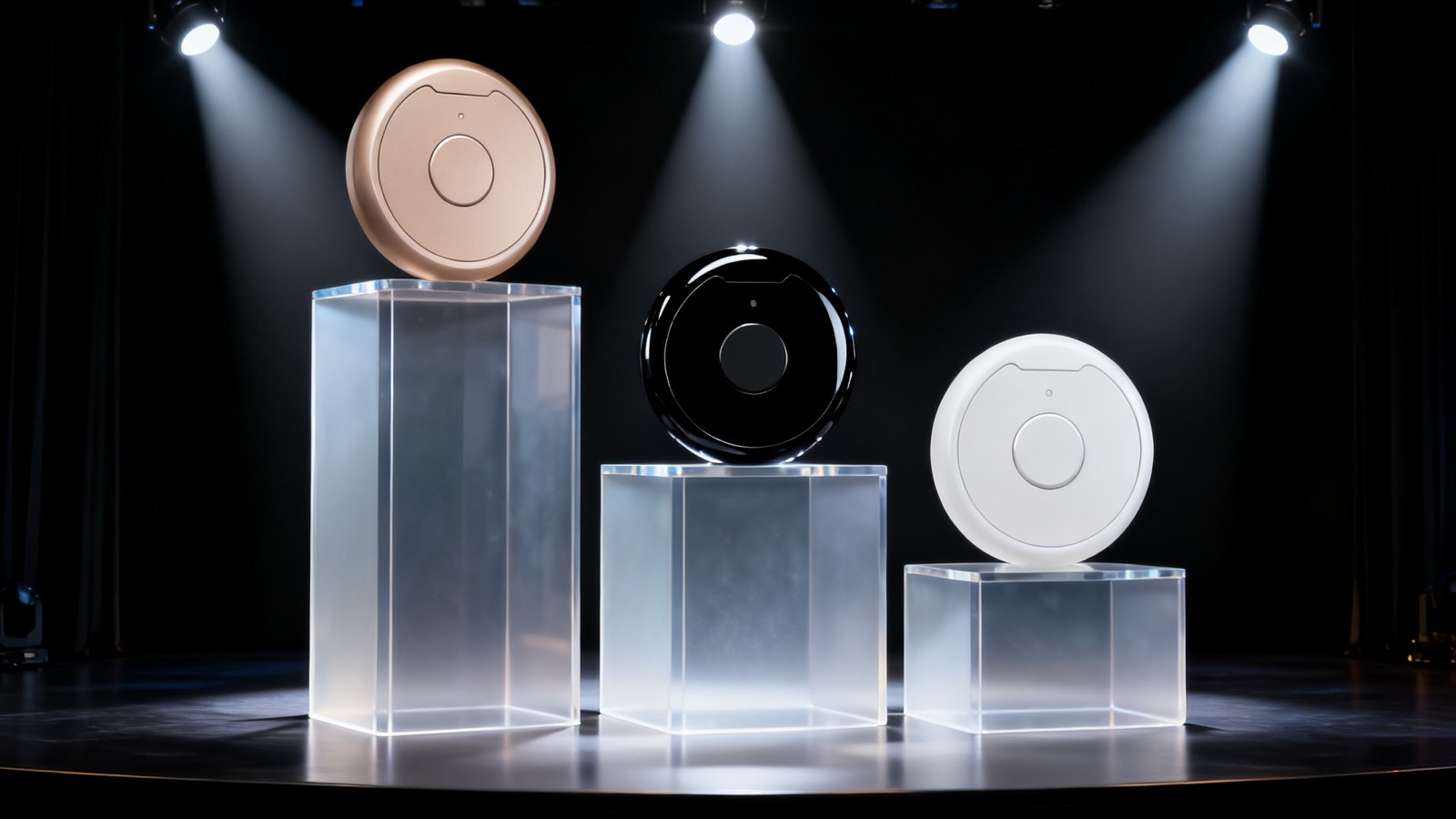
In 2026 the wearable-AI category has split into three honest shapes: passive life-recorders that listen and summarize, voice assistants that answer when you ask, and a new third archetype — the agent dispatcher — that hands a sentence to software agents and gets finished work back. The marquee failures (Humane) and the marquee glasses (Meta) bracket a crowded middle of pendants, clips, and rings. The one-line takeaway: the devices that win from here will not be the ones that talk the best, but the ones that do the most on your behalf.
This is a field guide, not a sales pitch. The goal is to let you place every meaningful device of 2026 on the same map — what it physically is, what it costs, which AI runs inside it, whether you can see or modify its code, and what it genuinely does well versus where it falls short. Nexting, the device this site happens to belong to, appears as exactly one entry in the table and gets the same scrutiny as everything else. Where a price or status is uncertain, this guide says so rather than inventing a number.
How to read the 2026 map
The fastest way to make sense of a noisy category is to stop comparing gadgets by their marketing language and start sorting them by the job they actually perform. Almost every wearable-AI product on sale today resolves into one of three archetypes. A device can lean toward more than one, but its center of gravity is usually clear once you ask a single question: after you interact with it, what comes back?
Archetype 1 — the passive life-recorder
These devices listen, more or less continuously, and turn the ambient audio of your day into transcripts, summaries, reminders, and searchable memory. You do not prompt them so much as wear them. The value is retrospective: at the end of a meeting or a day, you get notes you did not have to take. Bee and, in a more deliberate form, Plaud NotePin live here. The Friend pendant is a recorder in hardware terms but pours its output into companionship rather than productivity.
Archetype 2 — the voice assistant
These are pull devices. You press, you ask, you get an answer — fast, conversational, and bounded by whatever the maker has wired in. The Rabbit R1, the Humane AI Pin (while it lived), Meta's Ray-Ban line, and the forthcoming Button Computer are all assistants first. The interaction loop is short and synchronous: a question in, a reply out, the loop closes. They are the spiritual descendants of Siri and Alexa, freed from the phone or the countertop.
Archetype 3 — the agent dispatcher
This is the newest and, this guide will argue, the most consequential category. A dispatcher does not try to answer you itself. It takes your spoken instruction, routes it to a capable software agent — often one you already run, like Claude Code, Codex, or an open-agent stack — and lets that agent do real work in the background while you walk away. The reply, when it comes, is not a sentence; it is a result. Happy (software only) pioneered the remote-control version of this on phones. Nexting builds it into hardware. The Claude Hardware Buddy hints that even Anthropic sees the wearable as a controller for agent sessions rather than a chatbot.
The cleanest way to feel the difference between these three is to imagine asking each one the same thing: “summarize the contract I just discussed.” A recorder will have captured the conversation and, later, hand you a transcript and a summary — useful, but only because it was already listening. An assistant cannot help at all unless you read it the contract, and even then it is bounded by a single turn. A dispatcher takes the sentence, wakes an agent that can open the document, read it, cross-reference your prior notes, and produce a marked-up summary — then pings you when it is done. Same words, three entirely different machines behind them. Once you internalize that the archetype, not the brand, determines what is possible, the rest of the map reads itself.
The master comparison table
Here is the whole field on one grid. Prices are US retail as of mid-2026 and move often; treat them as directional, and check the maker before you buy. “Which AI” means the model or agent that actually does the thinking. “Open” distinguishes closed products from those with published, inspectable, or modifiable code.
| Device | Price (USD) | Form | Which AI | Open? | What it does |
|---|---|---|---|---|---|
| Humane AI Pin | $499 + $24/mo | Magnetic chest pin | Single provider | Closed | Voice assistant — discontinued Feb 2025 |
| Rabbit R1 | $199 | Handheld pocket device | Rabbit OS / Intern agent | Closed | Voice assistant + agentic creations |
| Meta Ray-Ban (classic) | $299+ | Smart glasses | Meta AI | Closed | Camera + voice assistant |
| Meta Ray-Ban Display | $799 (with band) | Glasses + EMG wristband | Meta AI | Closed | In-lens display assistant |
| Friend | ~$99–$129 | Neck pendant | Friend AI (hosted model) | Partial | Always-on companion |
| Bee | $49.99 + sub | Wristband / watch app | Bee AI (now Amazon) | Closed | Passive life-recorder |
| Plaud NotePin | ~$159–$179 | Clip / pendant / wristband | Hosted transcription + LLM | Closed | Meeting/voice note recorder |
| Button Computer | TBD (ships Dec 2026) | Shirt clip, press-to-talk | General voice AI | Closed | Fast voice assistant |
| Happy | Free (software) | Phone / web app | Claude Code, Codex | Open (MIT) | Agent dispatcher / remote control |
| Claude Hardware Buddy | ~$30 (DIY board) | ESP32 desk device | Claude Code (via BLE) | Open (reference) | Session status + approvals |
| Nexting PIN | $129 (BYOA free) | Collar clip | Your Claude Code / OpenClaw / Codex | Devices SDK open | Agent dispatcher |
The grid makes one pattern jump out immediately. The bottom three rows — Happy, the Claude Hardware Buddy, and Nexting — are the only entries whose “which AI” column names an agent you already control rather than a model the maker locked in. That is the dispatcher archetype, and it is the part of the table that did not exist two years ago.
Humane AI Pin — the cautionary tale
The Humane AI Pin is the most important device in this guide that you cannot buy. It deserves a profile precisely because its failure shaped everything that came after. Launched in April 2024 at $499 plus a $24-per-month subscription, the Pin was a magnetic clip-on with a laser projector that beamed an interface onto your palm, a camera, and a tap-to-talk assistant backed by a single AI provider behind Humane's own cloud. The pitch was a phone replacement. The reviews were brutal — slow responses, an overheating body, a projector that washed out in daylight, and an assistant that frequently got basic facts wrong.
By February 2025 it was over. HP acquired Humane's software platform, more than 300 patents, and most of its staff for roughly $116 million, and shut the device down. Existing Pins lost cloud connectivity at the end of February 2025, which meant the core features simply stopped working — a stark lesson in what happens when the intelligence lives entirely on someone else's server (TechCrunch, Axios, Fortune, 2025).
- Strengths: genuinely ambitious industrial design; the projector-on-palm idea was original; tap-to-talk with no screen pointed at a real future.
- Weaknesses:single closed provider, cloud-only, expensive subscription, poor latency and accuracy, and — fatally — bricked when the company died. Owners had no fallback because nothing was open.
Rabbit R1 — the comeback the critics did not expect
The Rabbit R1 launched alongside the Humane Pin and to similar derision: a $199 bright-orange handheld with a scroll wheel, a camera, and an assistant that, at launch, did far less than promised. What makes the R1 worth a serious 2026 entry is that, unlike Humane, Rabbit kept shipping. RabbitOS 2 arrived in September 2025 with a card-based interface and a renewed focus on the “Intern” agent, and 2026 updates have pushed it toward agentic “creations” — building small tools and games by voice (rabbit.tech newsroom; Android Police, 2026).
Notably, a June 2026 update added the ability to start, read, and continue Claude Code sessions from the R1 when a companion agent runs on your computer — a clear nod toward the dispatcher archetype, grafted onto an assistant-first device. The R1 in 2026 is a far more useful object than the R1 of 2024, even if it remains a closed platform tied to Rabbit's own OS and cloud.
- Strengths: the company stuck with it; steady software gains; affordable; recent agentic and Claude Code features show real direction.
- Weaknesses: closed Rabbit OS, no model choice, an extra device to carry, and a reputation it is still living down.
Meta Ray-Ban — the only mainstream success
If any wearable-AI product has crossed into the mainstream, it is Meta's glasses. The classic Ray-Ban Meta line, starting around $299, pairs a discreet camera and open-ear speakers with the Meta AI assistant for capture, hands-free calls, translation, and “hey Meta” queries. They succeed for an unglamorous reason: they are glasses people already wanted to wear, with the AI as a bonus rather than the entire reason to buy.
In September 2025 Meta added the Ray-Ban Display at roughly $799, which bundles a full-color in-lens display (a 600×600 panel in the right lens) with a Neural Band — an EMG wristband that reads the electrical signals of small finger movements so you can scroll and select without touching anything. Meta AI responses now render directly in your field of view, and the camera supports a viewfinder and zoom. Battery is rated up to about six hours of mixed use, extended by a folding charging case (Meta, about.fb.com, 2025).
- Strengths: genuinely desirable hardware; mature camera and audio; the Neural Band is the most credible new input method in the category; real retail distribution.
- Weaknesses:Meta AI only, fully closed, deep ties to Meta's account and data ecosystem, and an assistant model you cannot swap. The Display tier is expensive and supply-limited.
Friend — companionship, not productivity
Avi Schiffmann's Friend is the most polarizing device on this list. It is a roughly two-inch plastic disc worn on a necklace, listening through an always-on microphone and pushing observations and replies to your phone as text messages. Crucially, Friend is not trying to manage your calendar or take meeting notes — it is built to be a companion that comments on your life. Pricing has been reported in the $99–$129 range depending on source and timing; the intelligence runs on a hosted model behind Friend's app (Times of Israel; Fortune; TechBuzz, 2025).
Reviews have been savage and fascinating in equal measure. Multiple testers found the companion condescending or simply broken, and the product became a lightning rod for the question of whether anyone actually wants an AI that is always emotionally present. Friend has published portions of its hardware and software historically, so it earns a “partial” openness rating, but it is best understood as a social experiment in wearable form rather than a tool.
- Strengths: a clear, distinctive point of view; cheap; some openness; it asks a real cultural question.
- Weaknesses: always-on listening with obvious privacy and social costs; output that critics found unhelpful or hostile; no productivity payoff; you cannot choose the model.
Bee — the cheap recorder Amazon bought
Bee is the purest passive life-recorder in this guide and the cheapest serious hardware on it. The Fitbit-like wristband retails for $49.99 with a subscription (reported around $19/month), and there is an Apple Watch app variant. It records what it hears — unless you mute it — and turns your day into reminders, to-do lists, and searchable memory, understanding dozens of languages with a multi-day battery (TechCrunch; CNBC; Yahoo Finance, 2025).
In July 2025, Amazon announced it was acquiring Bee, folding the team into its ambient-intelligence ambitions. Bee's stated privacy posture is that audio is not stored and users can delete data, but the company has openly acknowledged those policies could evolve under new ownership — which is exactly the uncertainty buyers of any cloud-bound recorder should weigh. The model that processes your life is Bee's (now Amazon's), and it is closed.
- Strengths:very low entry price; strong battery and language support; genuinely useful daily summaries; Amazon's resources behind it now.
- Weaknesses: always-on recording; subscription required; closed cloud model; an acquisition that adds privacy ambiguity rather than removing it.
Plaud NotePin — the disciplined note-taker
Where Bee and Friend listen to everything, Plaud's NotePin is built for intentional capture — meetings, calls, voice memos — and is arguably the most commercially focused recorder in the category. The device sells for roughly $159–$179 (a newer NotePin S sits at the top of that range and ships with multiple wearing accessories), and it can be worn as a clip, pendant, or wristband. Transcription and summarization run through Plaud's cloud, with a free tier of about 300 minutes a month and paid plans (Pro and Unlimited) climbing to roughly $29.99/month for heavy users (plaud.ai; Omi AI pricing, 2026).
Plaud has built a real business selling to professionals who want clean, structured notes without running a recorder app. The trade-off is the familiar one: the device is a polished front end to a locked pipeline. You do not choose the model, you cannot self-host, and meaningful use beyond the free minutes requires a subscription. As a recorder, it is excellent; as an open platform, it is not one.
- Strengths: focused, reliable capture; flexible wearing options; strong summaries; sane free tier.
- Weaknesses:closed cloud, locked model, subscription gating for real volume, no agentic action — it produces notes, not outcomes.
Button Computer — the fast assistant from ex-Apple hands
Button is the newest assistant-archetype entrant and one of the most credible on paper. A Y Combinator W2026 company founded by Chris Nolet and Ryan Burgoyne — both veterans of Apple's Vision Pro team — Button is a small clip with an iPod-Shuffle-like form factor. You press it, speak, and it answers by voice in roughly half a second. Critically, it only listens when you press it, a deliberate rejection of the always-on model that makes recorders controversial (Y Combinator; Core77, 2026).
At launch Button targets professional workflows, integrating with email, Slack, and Salesforce by voice, positioning itself as a productivity tool rather than a companion. Shipping is planned for December 2026, US and iOS first, with Android to follow; a firm public retail price was not confirmed at the time of writing, so treat any figure as provisional. Importantly for this guide's framing: Button is a general voice assistant. It answers questions and triggers integrations — it does not dispatch and supervise long-running coding agents like Claude Code or Codex.
- Strengths: serious hardware pedigree; very low latency; press-to-talk privacy stance; clear professional integrations.
- Weaknesses: not yet shipping; closed; an assistant rather than an agent dispatcher; pricing and Android support still pending.
Happy — the open-source dispatcher with no hardware
Happy is the device on this list that is not a device. It is a free, MIT-licensed mobile and web client — with 17,000-plus GitHub stars and an active contributor community — that lets you remote-control a Claude Code or Codex session running on your own machine, complete with real-time voice and end-to-end encryption. You start a coding agent at your desk, then drive it from your phone: read its output, answer its prompts, keep it moving while you are away from the keyboard (github.com/slopus/happy; happy.engineering, 2026).
Happy matters here because it proved the dispatcher pattern in software before anyone shipped it in hardware. It is the clearest demonstration that the valuable wearable interaction is not “ask the AI a question” but “steer an agent that is already doing your work.” Its limitation is also its honesty: it has no body. There is no clip, no pendant, no hands-free speak-and-walk-away. You still need your phone in hand and your eyes on a screen.
- Strengths: free and fully open; auditable, no telemetry; encrypted; real remote control of real agents; large community.
- Weaknesses:software only — no wearable form factor; phone-and-screen bound; aimed squarely at developers, not general users.
Claude Hardware Buddy — Anthropic's tell
In spring 2026 Anthropic open-sourced the Claude Desktop Buddy (also circulated as the “Hardware Buddy”), a reference project and BLE API that let small maker devices talk to the Claude desktop apps. Running on a roughly $30 ESP32 board like the M5StickC Plus, the buddy wakes when a Claude Code session starts, idles while the agent works, gets visibly impatient when a tool-permission prompt is waiting, and lets you approve or deny right from the device without touching the keyboard (anthropics/claude-desktop-buddy on GitHub; CNX Software, 2026).
It is not a consumer product and Anthropic does not officially support it — it is a developer reference behind a Developer Mode toggle. But its significance is outsized. When the company that makes Claude Code builds a physical companion, the job it designs that companion to do is supervise an agent session: status, presence, and one-tap approvals. That is the dispatcher archetype, endorsed by the model maker itself, and it is the single strongest signal in this guide about where the category is going.
- Strengths: open reference and API; dirt cheap to build; a clear, correct view of what a hardware companion should do for agents.
- Weaknesses: not a consumer device; DIY assembly; unsupported; desk-bound BLE rather than a true go-anywhere wearable.
Nexting — the dispatcher as a wearable you own
Nexting is this guide's host, and it is included on the same terms as everything else. It is an Agent remote-control product: you wear it, speak one sentence, and instead of answering you itself, it routes the instruction to your own agents — Claude Code, OpenClaw, or Codex — which run the task in the background and return a result, even while your phone is locked or in your pocket. The framing is deliberate: dispatch, not chat. One sentence in, a finished result out, no app to open and no terminal to babysit. It can also remote-control a running Claude Code session from your pocket, which puts the Happy and Hardware Buddy ideas into a hands-free body.
On form and price, Nexting ships the PIN, a $129 collar clip with free worldwide shipping; a separate $1 reservation locks the $104 Founder Edition offer. A refundable $1 Ring reservation becomes a $50 launch credit, with estimated fulfillment around Christmas 2026. Bring-your-own-agent use is free, with optional E2E currently off by default in BYOA modes — when enabled, the agent runs on your device, the keys stay with you, and the cloud only relays ciphertext. A managed Nexting Plus tier ($29/month or $279/year) offers hosted Claude, GPT-4o, and Gemini for people who do not want to run their own agent, and that tier does require the cloud. Only the Nexting Devices SDK is open source; the product stack is proprietary.
An honesty note that belongs in a credible field guide: current Nexting units are 3D-printed and user-assembled, framed as a Co-Builder / open-hardware edition rather than a polished mass-production product. There are no verified battery, weight, or latency figures to quote, so none are claimed here. The founder is Eric Shang, a former DJI embedded engineer working solo.
- Strengths: the only shipping wearable built around dispatching your own agents; BYOA free with E2E by default; deep Claude Code / OpenClaw / Codex integration; can remote-control a live coding session hands-free; partly open.
- Weaknesses: early, 3D-printed Co-Builder hardware rather than refined mass production; no published spec numbers yet; the deepest value lands for people who already use coding agents; the Ring is not available for immediate delivery, with estimated fulfillment around Christmas 2026.
A closer read on latency, and why it quietly decides everything
One spec the marketing rarely foregrounds, yet which determines whether a wearable gets worn after week two, is the time between speaking and getting a usable response. The first generation of these devices died on this hill. The Humane Pin's reviews returned again and again to the same complaint: you would ask something and then stand there, palm out, waiting for an answer that took long enough to make you feel foolish in public. A wearable is a public object in a way a phone is not — you use it in front of other people, often mid-stride — so a delay that would be tolerable on a screen becomes socially unbearable on your chest.
This is precisely why Button's founders lead with a sub-second voice response and why glasses with on-device wake handling feel snappier than cloud-only pins. But latency means something different for each archetype, and conflating them is a common buyer's error. For an assistant, latency is the whole experience: a slow answer is a failed answer. For a recorder, latency barely matters, because the work is retrospective — Bee and Plaud can take their time turning your day into notes, and you will never feel the wait. For a dispatcher, latency splits in two: the acknowledgement (“got it, I'm on it”) must be fast and human, but the actual work can take minutes, because the entire premise is that you walk away while the agent runs. A dispatcher that made you wait for the full result would have missed its own point. This is why honest dispatcher makers, this guide included, decline to quote a single “latency” number — the meaningful figure is acknowledgement time, and the result simply arrives when the work is done.
Subscriptions, lock-in, and the true cost of ownership
The sticker price on the table is rarely what these devices cost over a year, and the gap is one of the most useful things to reason about before buying. Several products on the map are effectively services with a hardware deposit attached. The late Humane Pin charged $24 a month on top of $499 — nearly $300 a year for the privilege of keeping a device working that, as it turned out, would be switched off entirely within a year. Bee pairs its remarkably low $49.99 entry with a subscription reported around $19 a month, which means the cheapest hardware on the list is not the cheapest device to live with. Plaud is generous with a free 300-minute tier but gates real volume behind plans climbing to roughly $29.99 a month.
The structural question underneath the math is lock-in. When the intelligence lives in a maker's cloud and the model cannot be swapped, the subscription is not optional — it is the device. Stop paying and the hardware degrades or dies. This is the closed model's business logic, and it is not inherently wrong; it funds ongoing development. But it does mean a buyer should price the recurring cost into the decision and ask the uncomfortable question: if this company is acquired or folds, what do I have left? The bring-your-own-agent devices invert this. Happy is free forever because it is just a client to software you already run. Nexting's BYOA mode is free for the same reason — you bring the agent and the cost — with a paid Plus tier offered only as a convenience for those who would rather not. A managed tier you can opt into is a very different thing from a subscription you cannot escape, and the distinction is worth more than it looks.
Open versus closed — why it decided who survived
The single clearest line through this whole table separates the closed devices from the open or partly open ones, and 2026 has made that line consequential rather than ideological. Humane is the proof: when a fully closed, cloud-only device's company dies, the device dies with it. Owners were left holding inert hardware because nothing — not the firmware, not the model, not the cloud contract — was theirs to keep running.
Contrast that with the bottom of the table. Happy is MIT-licensed and auditable; if its maintainers vanished tomorrow, the code would still run on your machine. The Claude Hardware Buddy is an open reference you can fork. Nexting's BYOA mode keeps the agent and the keys on your device. Openness is not a moral badge here — it is a continuity guarantee and a privacy guarantee. The closed recorders (Bee, Plaud) and closed assistants (Meta, Rabbit, the late Humane) ask you to trust that their cloud will keep existing, keep its prices, and keep its privacy promises through any acquisition. Sometimes that trust is reasonable. The category's short history suggests it is also fragile.
Privacy — the always-on tax
Privacy in wearable AI is mostly a function of two design choices: does the device listen continuously or only on demand, and where does the audio go to be understood. The continuous recorders — Bee, Friend — carry the heaviest social and personal cost, because everyone around you is being captured by default, and the processing happens in a cloud you do not control. Bee's own acknowledgement that its privacy policy could change post-acquisition is the honest version of a risk every always-on cloud recorder carries.
The press-to-talk designs — Button explicitly, Nexting and the Rabbit R1 in practice — cut the always-on tax by only listening when you act. The deepest protection comes from keeping the intelligence local: Happy and Nexting's BYOA mode run the agent on your own hardware with end-to-end encryption (optional and off by default in Nexting), so the cloud, when it is involved at all, sees ciphertext rather than your words. The trade-off is real — managed cloud tiers (Nexting Plus, Plaud's pipeline, Meta AI) are easier and often smarter, but they require trusting a provider with your data. There is no free lunch; there is only a choice you should make deliberately rather than by default.
Pendant vs. clip vs. ring vs. glasses
Form factor is not cosmetic; it dictates what a device can sense, how socially acceptable it is, and how you interact with it. Each shape on the 2026 map carries a distinct set of trade-offs.
Pendants (Friend, Plaud as pendant, Bee-adjacent)
Hang naturally near the mouth, which is good for voice pickup, but they swing, flip, and read as conspicuous jewelry. The always-on pendants inherit the full privacy tax. They are the most “wearable” in the sentimental sense and the most socially loaded.
Clips (Nexting PIN, Button, Humane, Plaud as clip)
Attach to a collar or shirt, sit stable and high on the body for clear audio, and disappear more easily than a pendant. Press-to-talk clips are the privacy-friendliest hardware shape, which is why both Button and Nexting chose it. The downside is they depend on having a lapel or collar to clip to.
Rings (Nexting Ring)
The most discreet shape of all — nothing on your chest, nothing on your face. The cost is brutal engineering constraints: tiny battery, hard thermals, limited microphone placement. Rings make excellent controllers and notifiers and harder primary capture devices. Nexting's Ring takes a refundable $1 reservation that becomes a $50 launch credit, with estimated fulfillment around Christmas 2026. No unverified battery or thermal specifications are quoted here.
Glasses (Meta Ray-Ban, Ray-Ban Display)
The only shape that can show you something and see what you see. That makes glasses uniquely capable for capture, navigation, and translation, and the Neural Band gives them a real input method. The costs are price, battery, the social weight of a camera on your face, and total dependence on a closed ecosystem.
The input problem — how you actually talk to these things
Underneath the archetypes lies an unglamorous design fight that the category has not fully resolved: how do you give a screenless device an instruction without looking ridiculous or violating everyone's privacy? The answers on the 2026 map cluster into four approaches, and each makes a different bet about social acceptability.
The first is always-on listening, where you simply talk and the device decides what was meant for it. Bee and Friend chose this, and it is the most frictionless input method imaginable — and the most fraught, because it captures everyone in earshot by default and forces the wearer to manage a mute they will often forget. The second is press-to-talk: a physical button gates the microphone, so the device only hears you when you mean it to. Button built its identity on this, Humane used a touchpad gesture, and Nexting and the Rabbit R1 work this way in practice. It trades a half-second of friction for an enormous gain in social and personal honesty — the people around you can see when you are addressing the machine.
The third is gesture, and it is genuinely new. Meta's Neural Band reads the faint electrical signals of finger movements through an EMG wristband, letting you scroll and select with motions so small they are nearly invisible. It is the first credible alternative to voice for a wearable, and it solves the problem of issuing commands in places where speaking aloud is impossible. The fourth, still mostly aspirational, is ambient context — the device inferring what you need from where you are and what you are doing, with no explicit input at all. No 2026 product delivers this convincingly, and the recorders that gesture at it mostly produce summaries you must still go read. The likely near-future is a blend: press-to-talk or gesture to dispatch, voice to confirm, and ambient context only as a gentle suggestion rather than an autonomous action.
What the dispatcher archetype unlocks that assistants cannot
It is worth being concrete about why dispatching is a different capability rather than just a faster assistant, because the difference is easy to wave away and hard to overstate. An assistant's ceiling is whatever it can do in a single synchronous turn: answer a question, set a timer, fire off one integration. The loop has to close while you wait, which caps the ambition of any request to roughly “something that fits in a sentence and resolves in seconds.” That ceiling is exactly why assistant wearables have struggled to justify themselves — your phone already does the small synchronous things, and does them with a screen.
A dispatcher removes the time constraint, and removing it changes the class of work that fits on a wearable. “Pull the three competitor pricing pages, compare them to ours, and draft a summary” is not an assistant request — it is minutes of multi-step work involving tools, retries, and judgment. An agent can do it; an assistant cannot. When the wearable's job is to hand that off and let it run, the device's value scales with the agent's capability rather than with the maker's cleverness. Every improvement to Claude Code or Codex makes a dispatcher more useful without the hardware changing at all. This is the deepest reason the archetype is ascendant: it inherits the steep capability curve of frontier agents instead of being capped by what a small device's own software can manage. It also reframes “works while your phone is locked” from a convenience feature into the core proposition — the whole point is that the work outlives the interaction.
What this guide deliberately does not claim
A credible field guide should be as clear about its uncertainties as its findings. Several things in this space are genuinely unsettled as of mid-2026, and pretending otherwise would make the rest less trustworthy. Prices move — Friend has been reported at both roughly $99 and roughly $129 depending on source and timing, and Button's retail price was not firmly public when this was written, so any figure for it is provisional. Subscription terms shift after acquisitions; Bee's own statements concede its privacy policy could evolve under Amazon, and that uncertainty is the honest answer rather than a number you could rely on.
This guide also refuses to quote untested hardware specifications. You will notice no battery-life claims, no weight figures, and no latency benchmarks for the devices that have not published verified ones — including Nexting, whose current units are 3D-printed Co-Builder hardware without mass-production spec sheets. Its flagship Ring's published reservation terms are $1 refundable, becoming a $50 launch credit, with estimated fulfillment around Christmas 2026. Where a maker has published a figure — Meta's roughly six-hour Display battery, Plaud's 300 free minutes, the R1's $199 — it is cited as theirs. Everything else is described in terms of what the device is designed to do, not numbers nobody can yet verify.
Who should buy what
Strip away the archetypes for a moment and match devices to people. If you want clean meeting notes and nothing more, Plaud NotePin is the disciplined choice, and Bee is the budget one — with the caveat that both are closed clouds and Bee listens by default. If you want capture, photos, and a hands-free assistant in a shape you would wear anyway, the Meta Ray-Ban line is the only mature, mainstream answer, provided you accept living inside Meta's ecosystem.
If you want a fast, private, press-to-talk voice assistant for professional workflows, wait for Button to ship. If you are a developer who wants to drive Claude Code or Codex from your phone for free and own every line of the client, install Happy today. If you are a tinkerer who wants a desk companion that supervises your Claude sessions, build the Hardware Buddy for the price of a board. And if you want to wear something that takes a spoken instruction and hands it to your own agents to finish in the background — hands-free, with your keys staying with you — that is the slice Nexting occupies, with the honest caveat that its hardware is still a Co-Builder edition and its deepest value lands for people already using agents.
Where the category is heading — and why dispatch wins
Step back and the trajectory is legible. The first wave of wearable AI tried to be a better Siri: ask a question, get an answer. That wave produced Humane's collapse, Rabbit's rocky launch, and a general sense that talking to a gadget was not, by itself, worth carrying the gadget. The second wave — recorders — found a narrower but real job: remember things for me. Bee and Plaud are quietly useful, which is why one got acquired and the other built a business.
The third wave is forming now, and it is different in kind. The breakthrough of 2025–2026 was not a smarter chatbot; it was capable, autonomous software agents — Claude Code, Codex, OpenClaw — that can actually execute multi-step work. The moment those agents existed, the most valuable thing a wearable could do stopped being “answer me” and became “dispatch this to my agent and bring back the result.” You do not want your clip to be smart; you want it to be a remote for something already smart that you control.
Three independent data points confirm this is the direction, not a single company's bet. Happy reached 17,000-plus stars doing nothing but remote-controlling agents. Rabbit, an assistant-first device, bolted Claude Code session control onto the R1 in mid-2026. And Anthropic itself — the maker of the agent — chose to prototype a physical companion whose entire job is supervising agent sessions and approving their actions. When the assistant makers, the open-source community, and the model maker all converge on the same shape, that shape is the category's future. The agent dispatcher is not a marketing label; it is where the gravity is pulling.
The bottom line
In 2026 there is no single “best AI wearable,” and any guide that claims otherwise is selling something. There is a best recorder (Plaud, with Bee for the budget), a best mainstream pair of glasses (Meta Ray-Ban, Display if you want a screen), a best free developer dispatcher (Happy), and a best DIY agent companion (the Claude Hardware Buddy). The cautionary monument is Humane, and the encouraging comeback is the Rabbit R1.
The deeper lesson of the past two years is that the wearable was never the product — the relationship between the wearable and the intelligence behind it was. Humane lost because it owned both ends and then dropped them. The recorders found a foothold by being modest about what they own: they remember, and let you do the rest. The glasses succeeded by being a good pair of glasses first and a smart device second. And the dispatchers are rising because they own the least and inherit the most — they are a thin, honest bridge between your voice and an agent whose capability is improving faster than any single hardware company could match. The clearest predictor of whether a 2026 wearable will still matter in 2028 is not its chip or its battery but its answer to one question: when its maker stumbles, does the device keep working, and is the intelligence still yours?
The more interesting question is not which device is best today but which archetype is winning, and the answer is the agent dispatcher — the only category that turns a wearable from a thing you talk to into a thing that gets work done for you. That is the slice Nexting was built for: a $129 PIN you wear and speak to, that hands your sentence to your own Claude Code, OpenClaw, or Codex agents and brings back a result while your phone stays in your pocket — BYOA free, with optional end-to-end encryption, and honest about being early. Wherever you land in this table, judge any 2026 wearable by one test: after you speak, does it merely answer, or does it actually do the work?
Meet Nexting PIN — $129
An Agent remote-control product. Wear it, say one sentence, and your own agents — Claude Code, OpenClaw, Codex — finish the work in the background.
Buy now